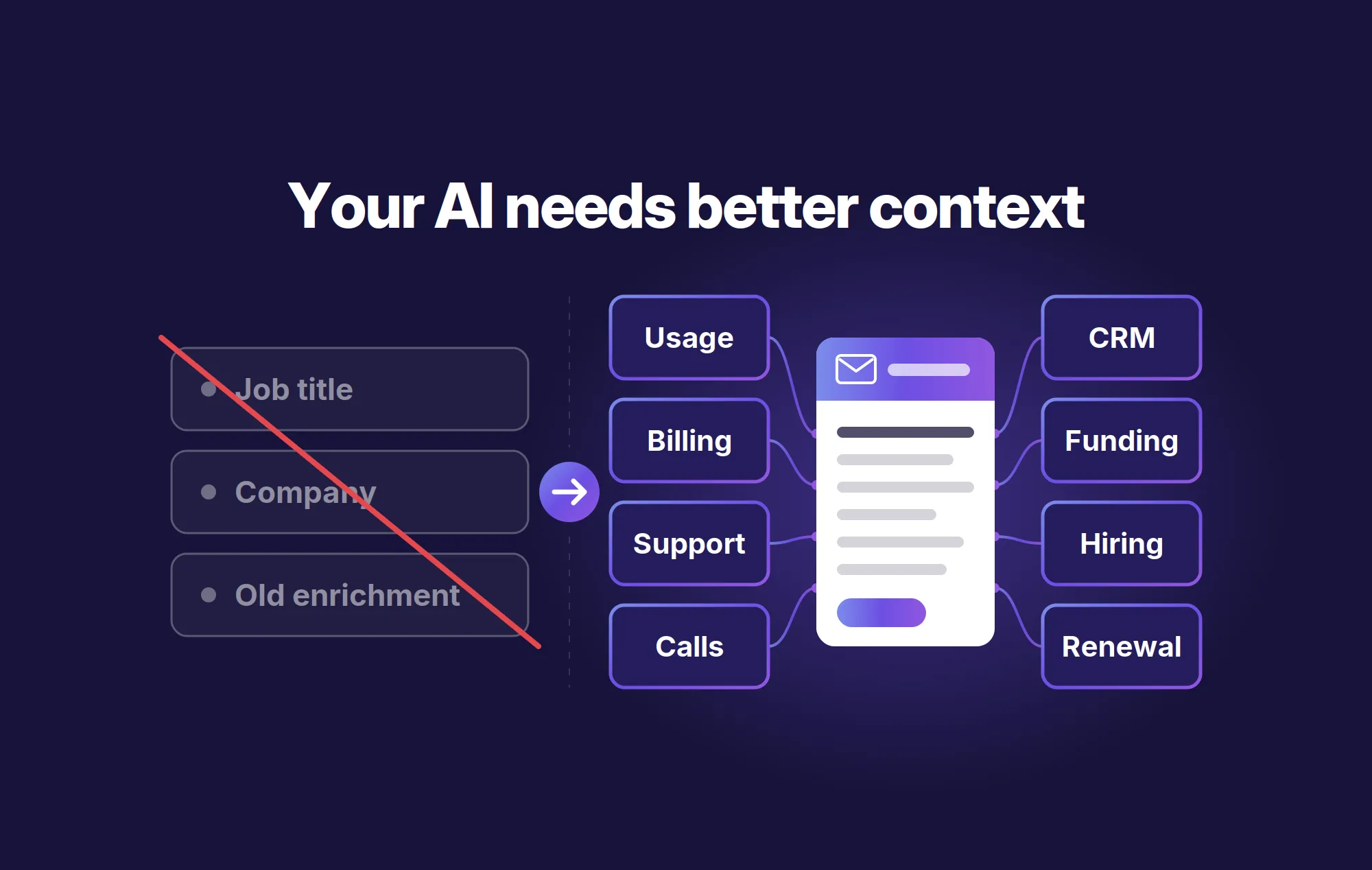
Pull ten emails that your sequencer’s AI sent last week and list what you think the writer knew for each one. The list won’t be long. Most AI sales sequencing runs only on a job title, a company name, and a stale enrichment field. The model for writing and sending each email may be excellent, but it’s writing with hardly any information. Your buyers notice within one line. No one is responding to an email from someone they’ve never met with a “Let’s chat!” subject line.
There’s nothing wrong with your sequencer. You just need more robust research before any outreach goes out. Relevance AI fixes that gap by running context-aware sequencing end to end. Its agents read your whole GTM stack before every AI sales sequencing step, then decide what to say and when. Your sequencer simply sends a more relevant, personalized email at the moment it lands best. The result: more opens, more responses, more leads.
Writing is easy. Every sequencer now ships an AI writer
Outreach, Salesloft, Gong Engage, and Apollo all ship AI writing features. The features work, and nobody needs to turn them off. Their limit belongs to native AI sales sequencing as a category, not to any one product.
A sequencing platform exists to send email well. It rotates mailboxes, protects sender reputation, tracks replies, and keeps reps in one workspace. Its AI reads only what the platform holds. The result is AI sales sequencing in an echo chamber, rearranging facts the platform already knows.
Most revenue teams already run plenty of AI. Copilots help one rep at a time, and each rep still drives every task. Agentforce works best inside Salesforce. Sales automation tools follow fixed steps. None of these tools reads the full account before it writes. Relevance AI does, on every account, before every step.
Research is hard. The facts that really move a deal live outside the sequencer
Picture one of your accounts. Adoption of a key feature stalled six weeks ago. Your champion just got promoted. Three support tickets this month raised the same complaint. A competitor came up on the last call, and spend jumped.
AI sales sequencing tools see none of these facts. The facts live in billing, product analytics, the support desk, call recordings, and the CRM. Some are public: funding news, hiring, and leadership changes. Together they tell a rep whether an account is ready and what it needs to hear.
Depth costs breadth
Good reps already know where these facts live and go digging for them, knowing that they are the key pieces of information that will really move an account forward. However, time for in-depth research competes with the time required for CRM updates and follow-ups. Time for selling shrinks. Faced with this time crunch, in-depth research time is only invested in the top accounts. The bulk of the territory just gets a template with a first name merged in, and they call that “personalization.”
Existing customers face the same research time deficit. Who is at risk of churn? Who is an opportunity for expansion? Did usage fall or rise? Is spending going up? Did the champion leave or get promoted? Those are critical signals that sit in systems the sequencer never reads. You can solve this by hiring more reps to do the research right - adding capacity, but also adding cost and months of ramp time. Relevance AI closes that gap without new headcount: its agents research every account, every week, from day one.
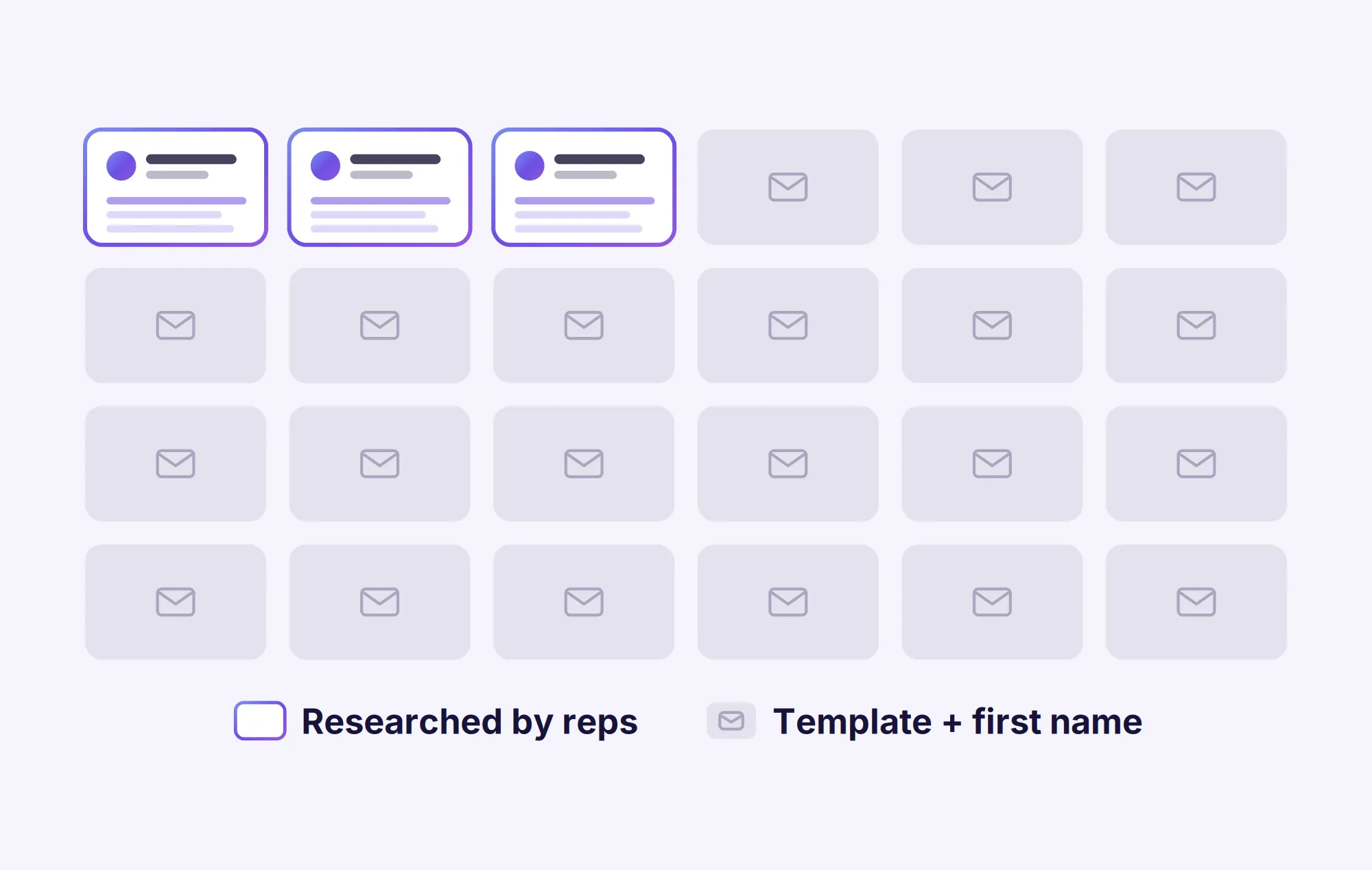
Most accounts on a territory plan get a first-name merge instead of real research.
Evaluate sales sequencing vendors by research, not just writing
If you pit two tools against each other with sample test inputs, they will simply evaluate which vendor’s emails read better. That test is misleading. Give two systems the same thin inputs and both write roughly the same email. Models are now good at writing sentences, so this is no longer a strong evaluation.
The real difference is what each system sees before it writes. An email built from twenty facts beats a nicely written email built from three. A specific email says something true only of that buyer, and buyers reward it with replies. When you compare AI sales sequencing vendors, compare the data each one can reach. The copy will read well either way. Relevance AI reaches all of it: CRM, billing, product usage, support history, call transcripts, and public research.
Context-aware sequencing: let Relevance AI run everything before the send
Relevance AI keeps your sequencing platform in place and runs everything upstream of the send. The agent gathers each account’s signals from the CRM, billing, product usage, support history, call transcripts, and public research. Then it picks the signals that matter today and writes the step. The work splits cleanly:
- Relevance AI runs the play. It decides what to say and why, using data that the sequencing platform was never built to see.
- The sequencing platform delivers the play. It sends from the rep’s own mailbox, handles compliance and unsubscribes, tracks replies, and logs activity to the CRM.
Reps barely notice the change. The step appears in the sequence they already run, built from the account’s real facts. Reps review it and send it as before. Reporting stays put, with every touch sent from a real mailbox and logged in the CRM.
Two signals beat one
One signal is usually a weak reason to write. A usage dip alone means little. A usage dip, a departed champion, and a renewal in ninety days make a real case for reaching out now. A Gong call three weeks ago where pricing came up strengthens that case. A rep could connect these facts with enough time. In context-aware AI sales sequencing, a Relevance AI agent connects them for every account, every week so that you never miss a beat.
Most stacks keep internal and external data apart. Usage, billing, and support stay internal, while funding and hiring news arrive as a static enrichment field. Relevance AI joins the two and adds your business knowledge: how your company sells and what each account is doing. The agent can then tell that a funding round matters more when usage is already climbing.
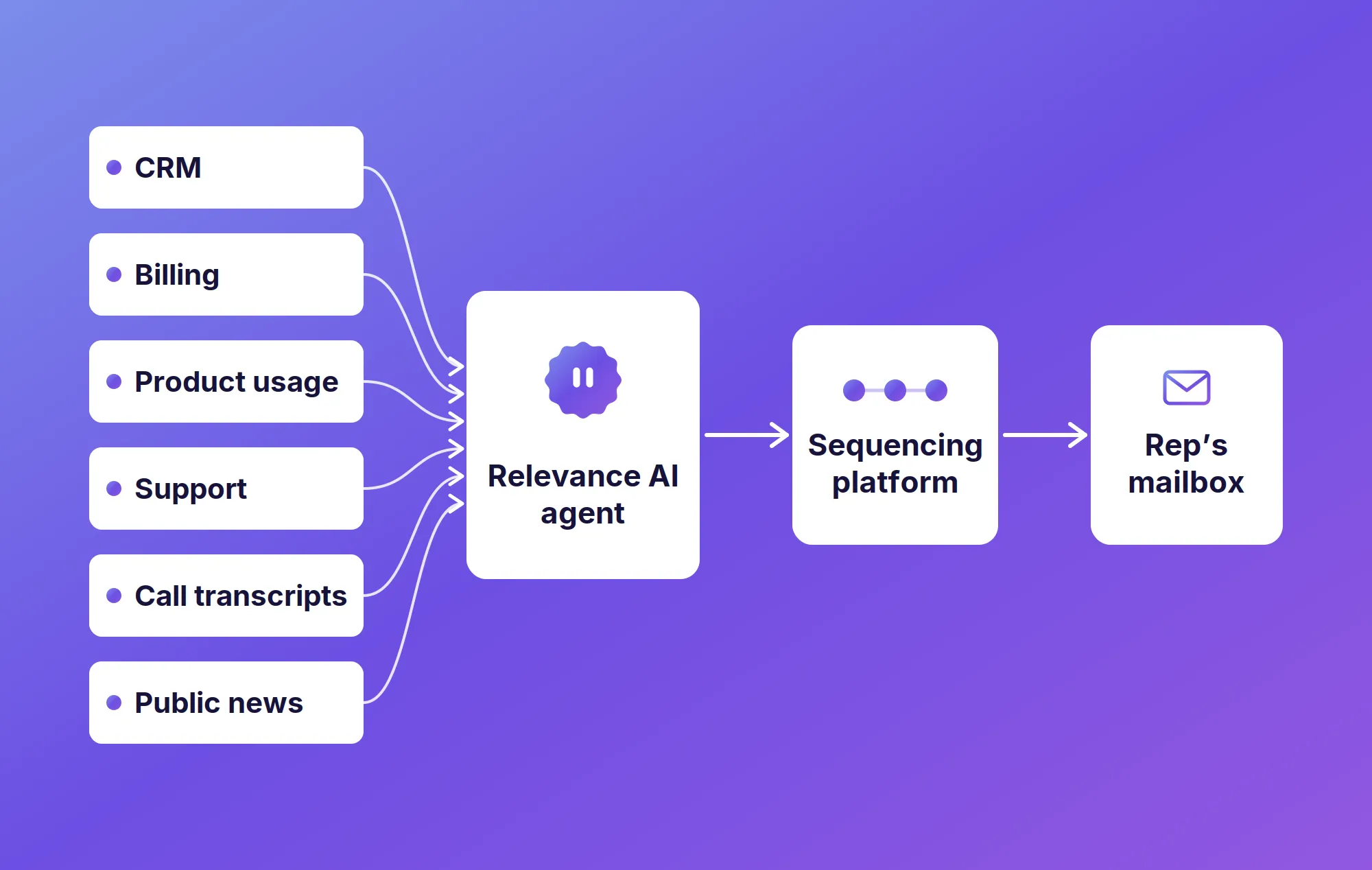
Context-aware AI sales sequencing splits the work: the agent writes, and the sequencer sends.
One platform runs AI sales sequencing across the whole revenue cycle
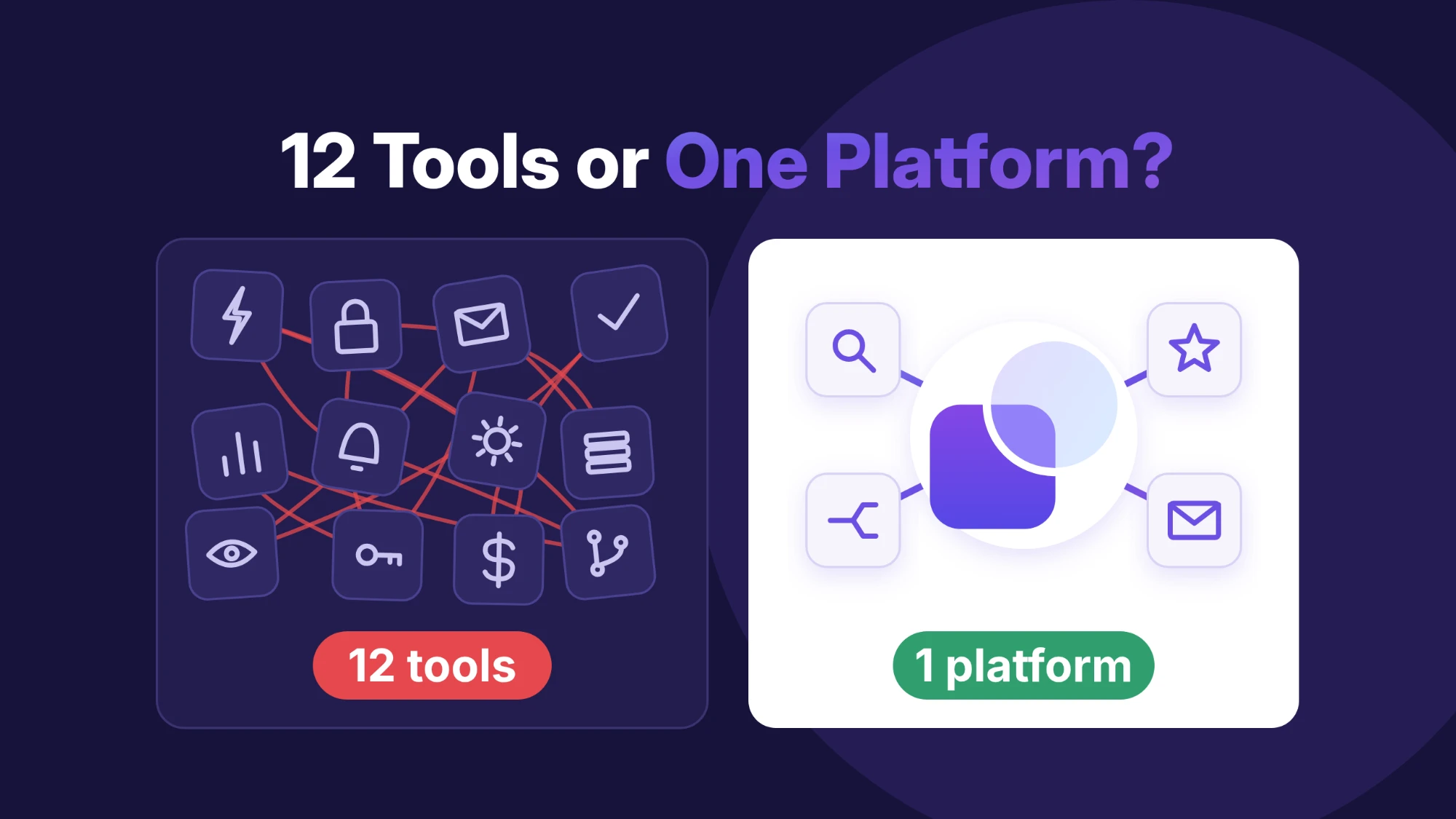
Relevance AI turns what your top performers already do into agents that work every lead and every account. One platform replaces a point tool for every stage. The same context layer runs four plays, each tied to the number it moves:
- Prospecting: The agent researches target accounts and writes outreach for each prospect from real account facts. Pipeline per rep rises.
- Lead qualification: The agent responds to and qualifies every inbound lead within minutes, around the clock. Fewer leads go cold.
- Closing: The agent briefs reps before every call and logs next steps in the CRM afterward. Pipeline reviews run on current data.
- Retention and expansion: The agent flags churn risk and upsell signals across every account. Account teams reach out before the renewal conversation starts.
Each part of the revenue team gets something concrete:
- CROs and VPs of Sales: More pipeline per rep, a forecast built on clean CRM data, and capacity that grows without hiring.
- Sales managers: Every rep runs the same proven play, and new hires ramp faster.
- Reps: Qualified meetings, thorough call prep, logged follow-ups, and more hours for selling.
- RevOps: One place to manage, monitor, and approve every agent. Quality checks score each agent and keep results consistent as volume grows.
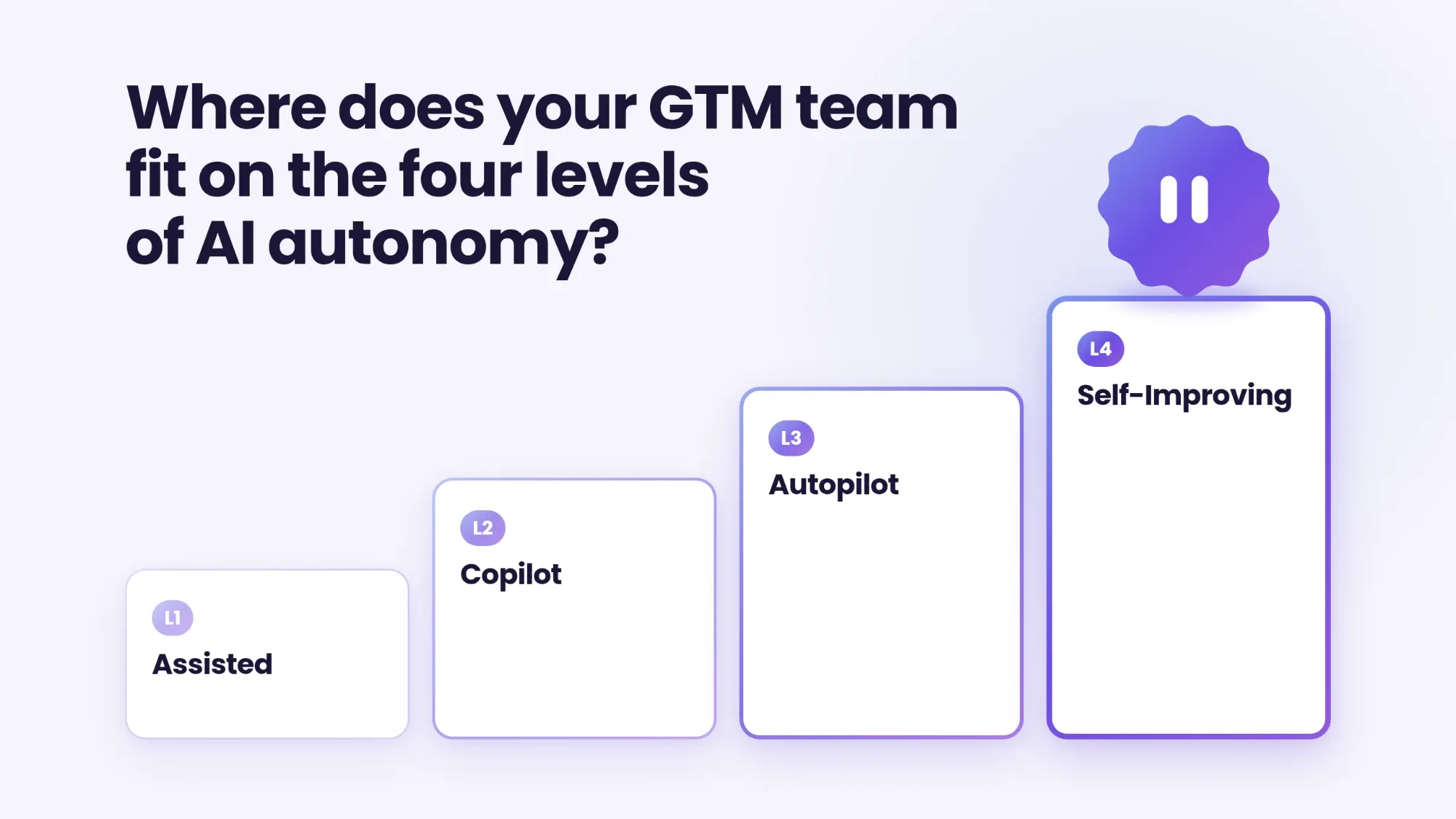
Published AI sales sequencing rollouts on Relevance AI follow a common pattern. A person approves every output at first. Volume rises as the team refines prompts and tools, and full automation arrives once quality holds steady. Legal, security, and data teams join from the start, since sales rarely owns every system the agent reads.
Get started with context-aware sales sequencing: one play, two signals
Pick one segment, one sequence, and one signal pair you already trust. A renewal coming up in the next 90 days paired with a usage dip makes a strong first pair for retention. Relevance AI reads both signals for every account in that segment and writes each step. Have reps review every message at first. Compare reply and meeting rates against a control sequence that runs without the agent, then add the next signal.
Writing is rarely the hard part of AI sales sequencing. Deciding which systems the agent may read is harder, and that decision determines the ceiling on everything after it. Sales, RevOps, finance, and support usually make the call together. Their conversation also shows which systems hold signals worth acting on.
Linking the agent to your sequencer is a one-time job. Relevance AI connects to 2,000+ tools through integrations and an open API. The agent reads each system fresh every time it writes, keeping context current. In this setup, Relevance AI leaves sending to your sequencing platform. Sending stays with your platform and the rep’s own mailbox.
Context improves AI sales sequencing that already has a sound offer and the right accounts. A well-informed email to the wrong person still wastes a send, and better data won’t rescue a weak offer.
See Relevance AI run context-aware AI sales sequencing on your own data
Run Outreach, Salesloft, Gong Engage, or Apollo? Bring one play to a working session. We’ll connect Relevance AI to one signal pair and one sequence, then show you what your reps would get next. From there, Relevance AI can run every play across your revenue cycle with your existing team.